Written by Gerhard Schweinitz
Published in Human Resource Director (HRD), 9 December 2025
Artificial intelligence is drastically reshaping the way Australians work. It’s changing how individuals deliver software, pull insights, or develop content, how teams make decisions, how leaders allocate resources, and how organisations build capability.
For HR leaders, it represents both a challenge and a unique opportunity to guide cultural transformation.
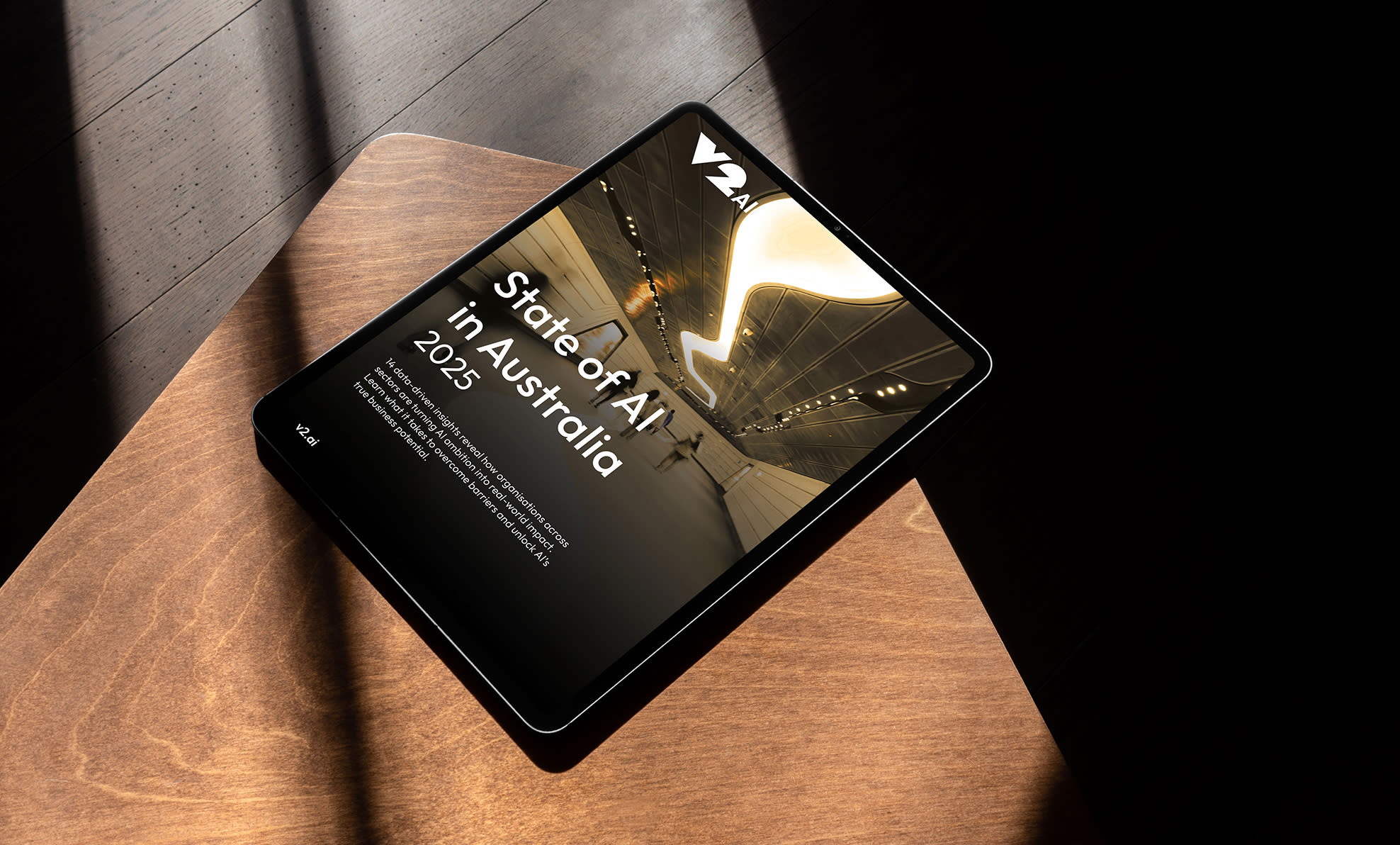
V2 AI’s second State of AI in Australia report captures a snapshot of this inflection point. AI is now embedded in the strategy of most organisations, with 80% of respondents identifying it as a business priority.
But the human side of the equation is lagging. Only one in three respondents believes their organisation is mature in AI. However, organisations taking a human-centric approach to AI development were rated higher in AI maturity, indicating that workforce capability is the key to unlocking full potential.
A workforce keen to evolve
The report shows strong employee appetite for AI adoption and a workforce eager to learn. Even among respondents whose organisations are neutral or cautious about AI, 70% believe their company should embrace it.
However, the data also shows that many employees are underprepared. Average AI training across organisations scored just four out of 10, while overall AI skills were rated at five. Among respondents who rated their organisation’s AI training at seven or above, 73% also described their organisation as mature or very mature in AI capability.
You can’t plug in maturity. You have to build it.
HR leaders have an exciting opportunity to align learning and development programs with business objectives. AI capability should no longer be confined to data scientists or IT teams. Finance professionals, marketers, and people managers all need to understand how to apply AI tools to their work.
Your people are your greatest asset when it comes to AI, invest in them. The report shows organisations that invest in training see benefits beyond technical skills. Those with stronger AI training report higher satisfaction with their AI operating models, better ethical frameworks, and greater confidence in scaling projects.
Bridging the Trust Gap
AI adoption succeeds when employees trust the technology and understand its role. However, the rapidly changing nature of AI technology makes it hard for everyone to keep up. Ethics frameworks allow you to confidently scale AI. Embedding ethics into training inspires trust and accelerates AI adoption so organisations can maximise the benefits of this technology. It helps employees use AI confidently and responsibly.
According to the report, 62% of respondents said their organisation has or is developing an ethical framework, 45% of those with an actively maintained framework already have agentic AI systems in production.
Leadership’s role in the AI era
While enthusiasm is high, 68% senior leaders agree their company still has room to grow. This reflects a clear need for leadership to be more focused on digital capability. Leaders who build a confident workforce well-versed in AI will leapfrog competitors.
Leaders should encourage employees to test ideas, share learnings, and develop problem-solving skills to better harness AI systems. They should foster an AI-first culture that thrives on curiosity and collaboration. HR teams can support this environment by facilitating knowledge sharing and continuous feedback.
The report found that organisations having employees satisfied with their AI operating model were almost 30% more likely to have multiple AI initiatives reach production. A well-trained workforce uses AI more effectively while also contributing to better governance. Skilled employees understand how to identify risks, follow data protocols, and measure success against clear business outcomes.
The role of HR in AI transformation
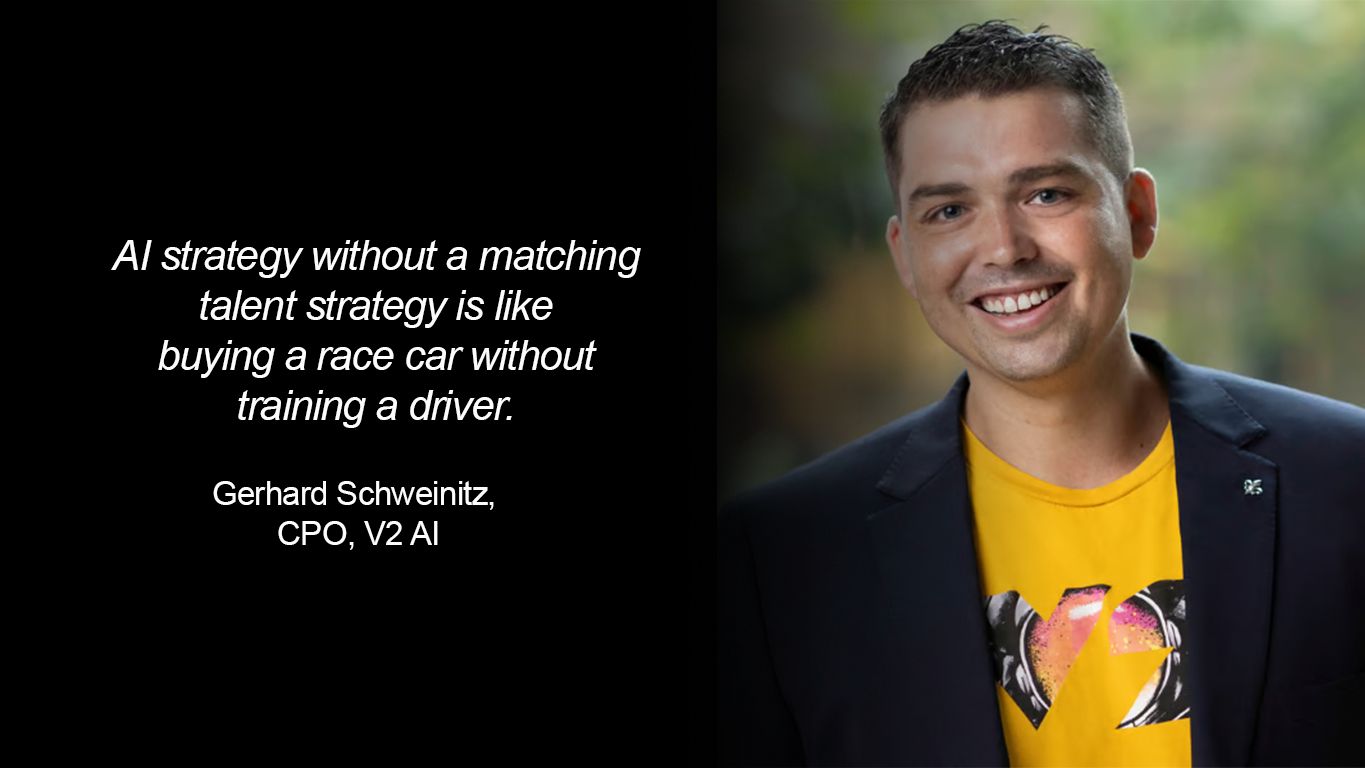
AI strategy without a matching talent strategy is like buying a race car without training a driver.
The path forward for HR is to champion learning, transparency, and inclusion. AI can lighten workloads and enhance employee experience, but it also requires clarity and reassurance. Regular communication, shared understanding of goals, and recognition of progress maintain trust during change.
HR teams can integrate AI capability building into leadership programs, performance frameworks, and career pathways. They can also ensure that policies keep pace with technology by aligning with ethical standards and compliance requirements.
The Future of Work Is Human + AI
AI’s rapid adoption in Australia is fundamentally reshaping the workforce. Technology provides the tools, but people provide the insight, creativity, and judgment that give those tools purpose.
As HR leaders, our role is to make sure every employee has the confidence and knowledge to work effectively with AI. When that happens, technology amplifies human potential.
The organisations investing in people now benefit most from AI as capability drives maturity, and maturity drives competitive advantage.
Gerhard Schweinitz is the chief people officer at V2 AI.