Written by Rosalyn Page
Published in CRN 5 August 2026
Also published in
V2 AI is expanding into Western Australia with several new appointments as AI demand grows in the state’s energy and resources industry.
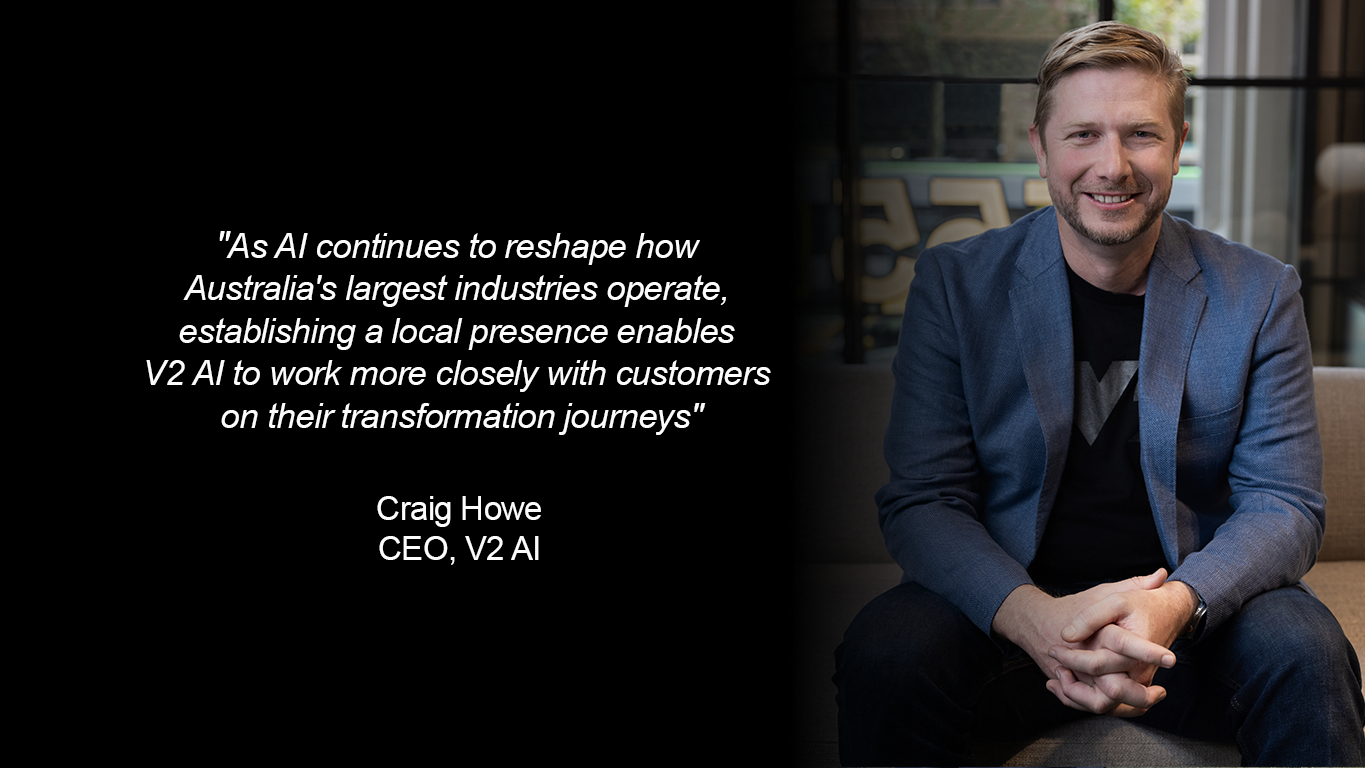
V2 AI CEO Craig Howe said that the business specialises in providing AI for these complex, highly regulated industries that are looking to improve operations and make better use of their data while ensuring stronger compliance.
“As AI continues to reshape how Australia's largest industries operate, establishing a local presence enables V2 AI to work more closely with customers on their transformation journeys,” Howe said.
In the energy and resources sector, V2 AI is finding that many organisations are looking to AI to improve safety, discover new mine or drilling sites, apply predictive maintenance to reduce failure rates, removing bottlenecks across the value chain and reduce their environmental impact.
“AI has the potential to redefine how Australia harnesses its natural resources, improves operational efficiency and advances toward a more sustainable energy future,” he said.
As WA organisations look beyond AI experimentation towards full-scale deployment, V2 is emphasising its practical delivery experience to deliver tangible outcomes. To help cement its presence in one of the country’s key energy and resources markets, with has made several new hires.
Richard Allen joins V2 as partner, after more than a decade at AWS and many years working with organisations in resources, construction and agriculture sectors. With a recent focus on applying AI to enterprise software delivery, Derek Bingham joins as Perth director.
V2’s Melbourne client footprint has grown in parallel and it has appointed Holly Dean as partner, bringing more than 20 years' experience across Salesforce, AWS, Microsoft, Sitecore and Stax.
“As V2 AI continues to expand both in Australia and internationally, we need the executive leadership bench that can support us to scale in these new regions,” Howe told CRN Australia.
Governance emerges as key challenge in operationalising AI
To properly adopt AI, organisations need a bespoke strategy that encompasses their regulatory requirements, business goals and customer expectations, Howe explained.
As they look to operationalise AI, the biggest challenge businesses face is operating AI safely and responsibly at enterprise scale. “Many organisations have moved beyond experimentation, but they're now grappling with how to govern AI across hundreds or even thousands of users, multiple models and increasingly autonomous AI agents,” he told CRN Australia.
Without governance foundations, AI can introduce new operational risks. “Models can access information they shouldn't, generate inconsistent outputs or drift over time without organisations realising until business performance or compliance is affected,” he said.
“In highly regulated industries like financial services, energy, telecommunications and government, those risks can’t be tolerated,” he added.
Governance, observability and security have become fundamental requirements.
“Organisations need confidence that AI is using the right data, making decisions within agreed guardrails, protecting sensitive information and producing outcomes that can be monitored, audited and explained,” he said.